

Under Attack: Authority's False Allegations
When powerful forces come after a person and inflict pain for years before being found unjustified in their work

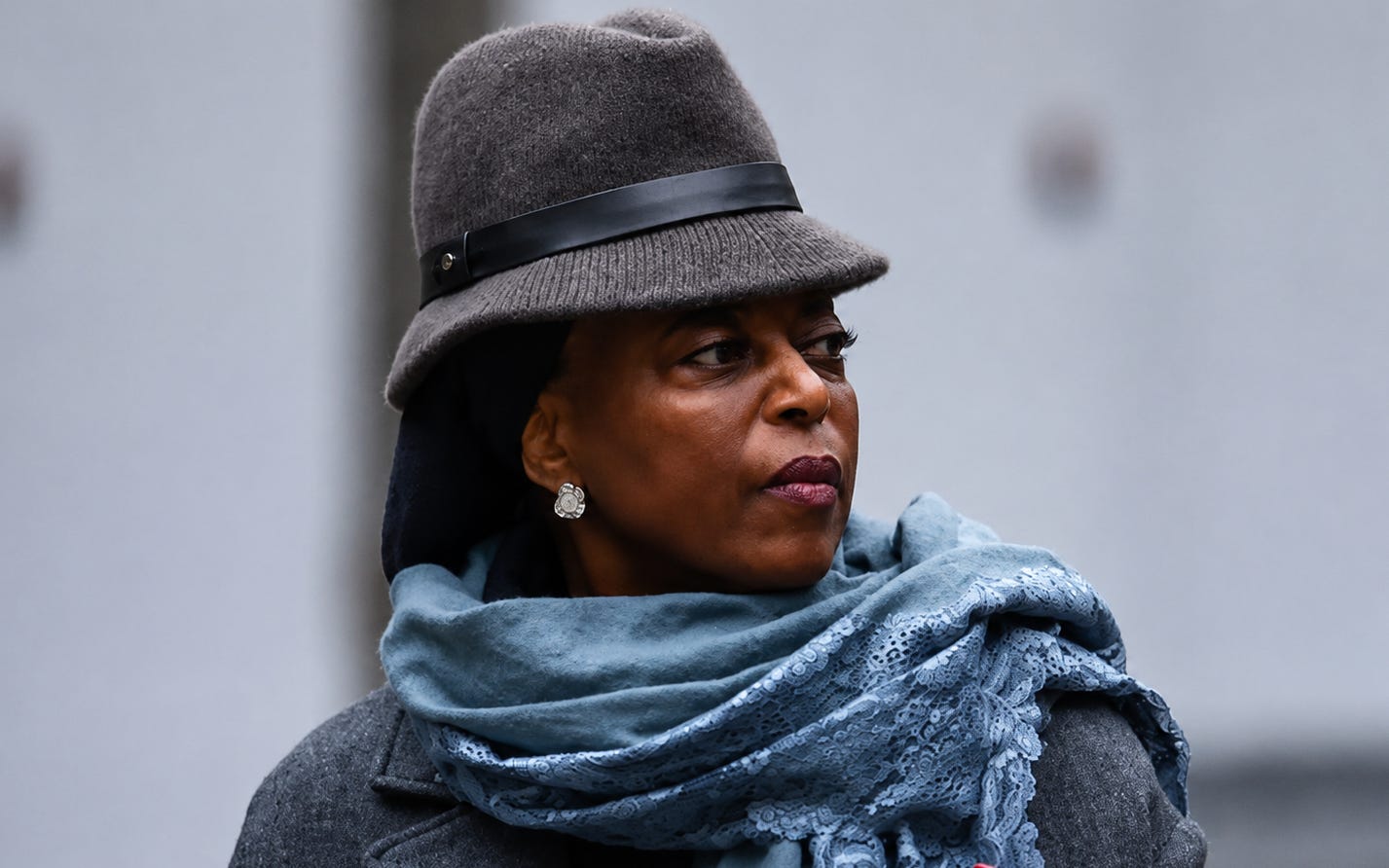
A person may be cleared of alleged wrongdoing, whether it be an offense, ethical misconduct or crime and still suffer a degree of diminished or lost trust and reputation that results in losing a job and damaging a career.
Reporting by Steve Swann at the BBC tells a story about what can happen to a leader, a human being, maybe like yourself, when someone else’s conclusion is not entirely aligned with a totality of facts, intellectual humility, evidence, context and proof.
Swann reports on the experience of a former oil minister from Nigeria. You might be tempted at this point to disconnect from this intelligence brief, yet this isn’t about Nigeria, it’s about false allegations, authority overreach, loss and reputation.
That sharp-edged reality deeply impacts people in the United States and worldwide.
At times, in investigations, once a negative and maybe, overconfident narrative forms early, it can prove sticky, even if and when additional facts complicate or contradict hardened conclusions.

Let’s set the stage: You’re a person in leadership and maybe one who is viewed, rightly or wrongly, as a threat to others who feel you may block their pursuits. You end up being accused of malfeasance: accepting bribes. This results in shock and fear.
This brief, however, is not about that alleged crime. It’s about how inaccurate allegations impact professional relationships.
Diezani Alison-Madueke claims that UK authorities ruined her reputation in their overzealous effort to prosecute her, which was extremely “painful and traumatic.”
Then and now, she came to realize, that the 13-year investigation by the National Crime Agency (NCA) “could have been handled a lot differently.”
This is an important point to grasp. Authority might or might not be well-intentioned in its work and there is the possibility that it won’t, figuratively speaking, hit the brakes, stop and think about what it might be missing that would change its mind.
There is another example of this that I recently wrote about and in that case, authorities made someone’s life heavy and miserable with inaccurate claims for several years before the “findings” and call for punishment were proven wrong and unjustified in court.
This story has some similarities yet this isn’t about a comparison today.
Alison-Madueke was her country’s oil minister for five years and the first female president of the industry’s exporters’ group, OPEC. She spoke of her experiences:
“I’ve not been allowed to travel. I’ve not been allowed to work,” she told Swann. ”They destroyed my reputation and my integrity. When your freedom is taken away from you… it has a very deep impact upon you psychologically.”
That is, of course, true, because that’s how human beings process loss. It’s one thing when it’s self inflicted and maybe less worthy of concern or compassion. It’s entirely another point, when the wrongdoing may be imposed by people in positions of authority that we trust to be reliably professional, ethical and critical thinkers.

“I knew that I had never done anything nefarious and I had never done any of the heinous things I was being accused of doing,” Swann reported Alison-Madueke as saying.
The facts: She was found not guilty, Swann reported, of five counts of accepting bribes and conspiracy to commit bribery.
Let’s look at the embarrassment, scrutiny and likely, emotional and psychological impact that Alison-Madueke encountered, endured and suffered.
She was arrested in 2015, yet not charged until 2023, per Swann’s reporting. Eight years of scrutiny, negative judgment and severe punishment hanging over a person’s life.
It’s noteworthy that Alison-Madueke’s defense team suggested that there were documents that could have proved her innocence, yet they were now missing.
Maybe surprising or interesting to you, she doesn’t point fingers in any one direction.
“There’s a bit of blame everywhere,” Alison-Madueke said. To her, the authorities need to examine themselves, which is a recommendation that likely will be poorly received, even if it is an accurate expectation of responsibility, ethics and course correction for improvement.
The “authorities need to look into the processes and practices that they deploy in these cases,” Alison-Madueke said.
Critical observers may communicate, “where there’s smoke, there’s usually fire.” Often, that is true, yet it is not an absolute. What it is instead is a heuristic and formed bias.
Alison-Madueke’s claim, accurate or not, is that, “she was ‘low-hanging fruit,’ ignoring the work she says she did to counter corruption in the oil industry and the fact she had made powerful enemies in Nigeria, Africa’s largest oil producer,” Swann reported.
Is that possible? Of course. Is it plausible? In my professional judgment, yes, definitely. In life, we come to learn that when a person or group is deemed a threat, real or perceived, aggression in some form can become a natural, common human strategy.
The authority, she argued, should have “taken a step back and looked with a little more depth at the truth of the situation on the ground,” Swann reported.
Reality check: This is not intended to be insulting to Alison-Madueke. To the contrary, I agree, she’s correct.
The norm, however, is that ego and self-protection can drive a governing body or person in power to experience a reluctance or resistance to “take a step back” and conduct a deeper, sounder, more objective examination or investigation with a stronger consideration for all facts and within context.
That ethical and moral responsibility is, at times, unethically ignored or dismissed as irrelevant. Why? Pressure from higher-up directives or emotions and biases based on faulty pattern recognition or inaccurate cognitive associations.

Surprisingly and honorably, after the not-guilty verdict, there was no attempt to save face by the governing body in a public statement, as the agency humbly stated that it respected the jury’s decision.
It has not, as of the date of this brief, responded to the media or Madueke about the ruling, meaning that an apology may not be forthcoming and that disappointment is a failure of responsibility.
Two other parties were also found to be not guilty. This was a significant reveal, after years of being convinced in error that criminal activity had been committed, regardless of the very real and multiple costs to human beings and their lives, no accountability was accepted. People’s lives suffered.
Even when investigations conclude in the targeted person’s favor, people often painfully discover that trust, their professional relationships and opportunities don’t always return to their pre-allegation, pre-investigation state.
Subscribe for free (or paid, for Intelligence Briefs and the RI Column) to receive more interviews, analysis, insights and thought leadership about trust, conflict, stakeholder relationships, risk management, communications and reputation.
Connect with Michael Toebe on LinkedIn
For services, message me here or on LinkedIn or EveryExpert
Proactive and responsive services for matters of trust, stakeholder relationships, risk, conflict, communications, crisis and reputation. Improve probabilities of outcomes.