'Negotiating' Yourself Right Past Strength of Character and Safety
Learning helpful, protective lessons from unethical and criminal work behavior and the psychological analysis and guidance underneath it

People can improperly reason with themselves in such a way that that their conduct veers off its natural course, which will eventually surprise, harm and shock them.
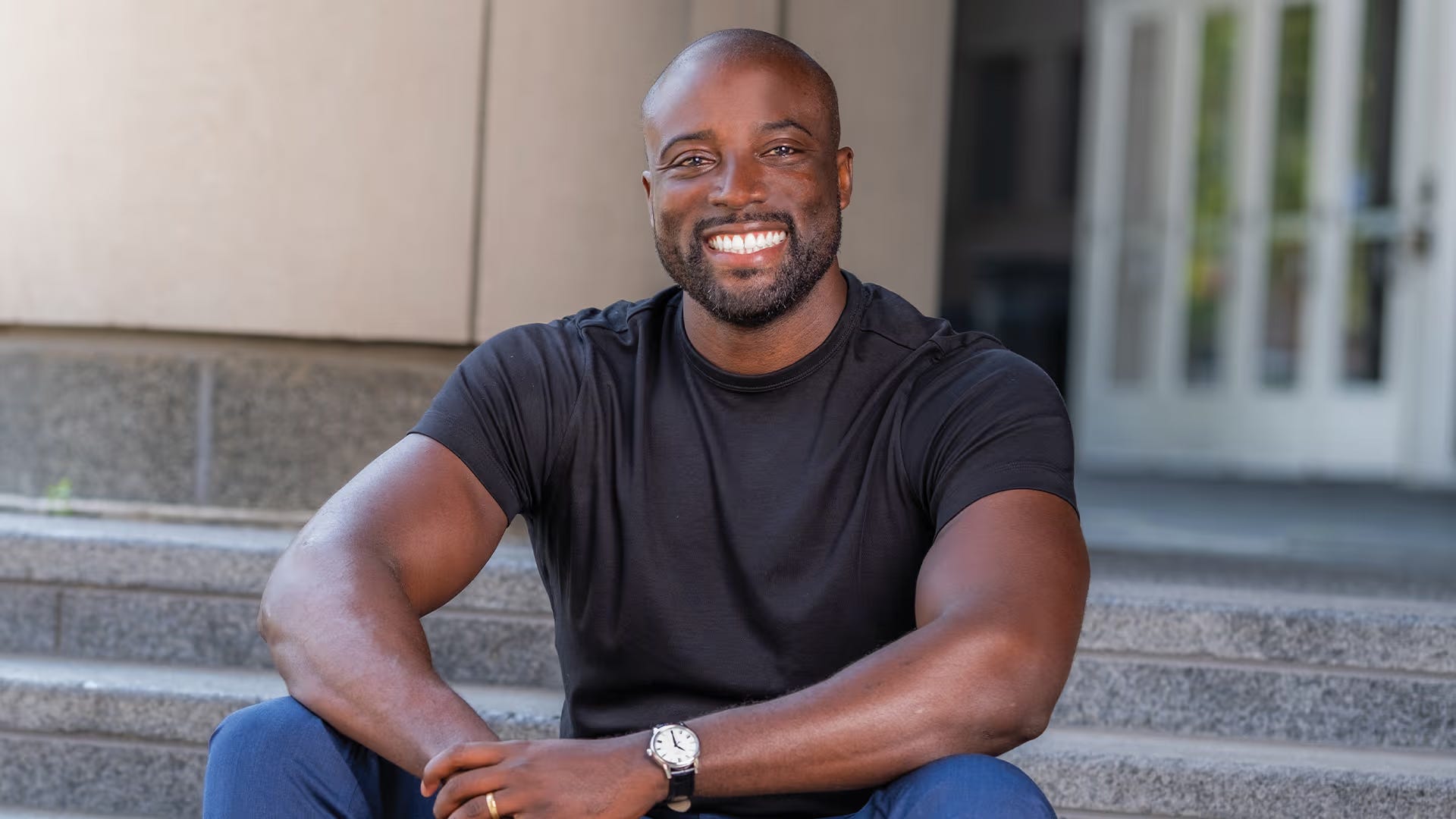
“The drive to perform and the desire to achieve goals can push even well-meaning professionals towards gray areas,” Kwame Christian recently wrote.
“Opportunity emerges when controls are lax, presenting a pathway to cross a line,” he added. “But the crucial, often invisible step is rationalization — the story we tell ourselves to justify actions we know are wrong.”
Many people didn’t think they would one day go over the line and out of bounds with their actions, find out that they did it to themselves and come to learn they now have an enormous problem in their lives.
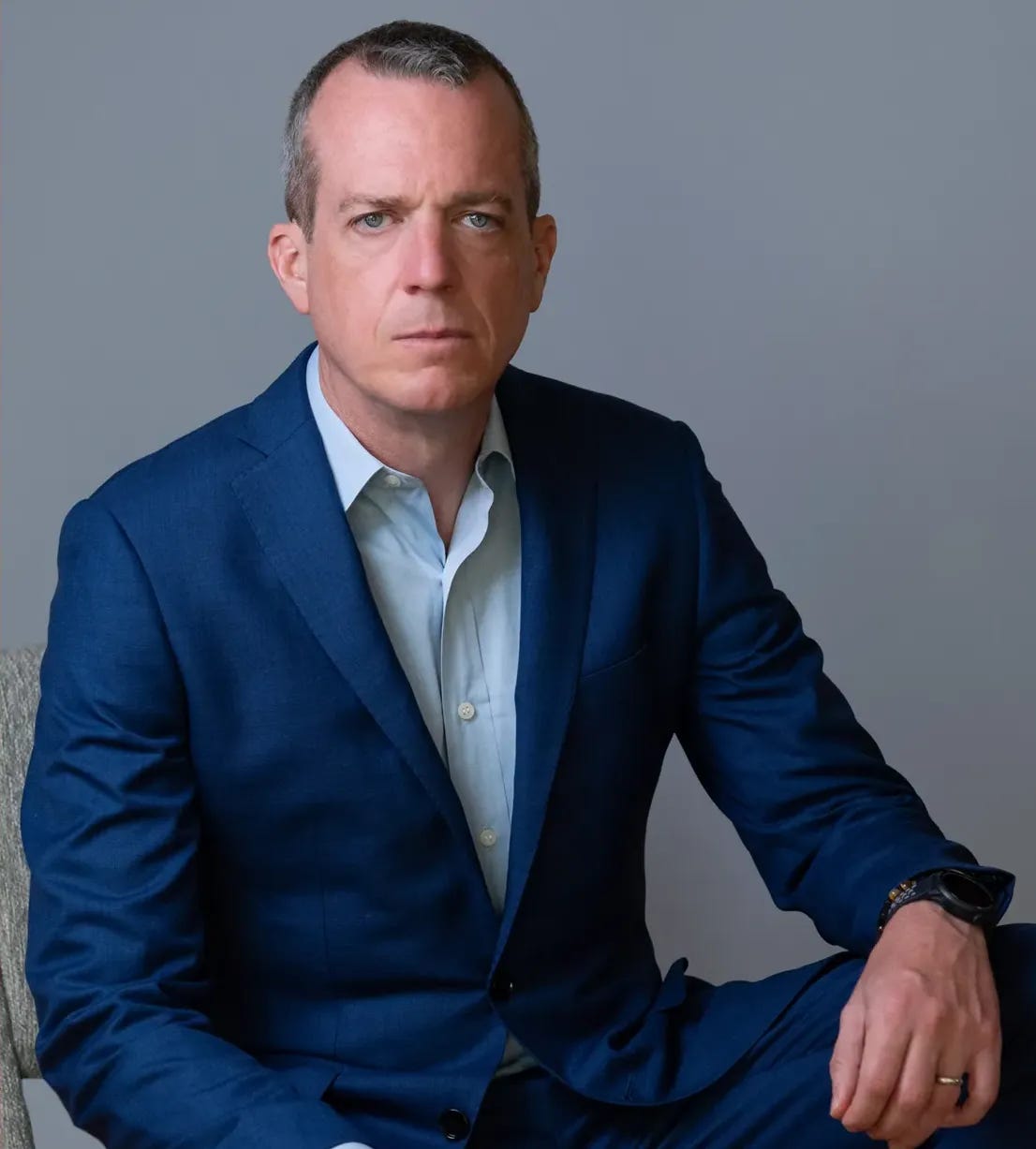
It’s a topic that Christian, an author, podcaster, speaker and founder and CEO at the American Negotiation Institute, examined more deeply in talking about Tom Hardin (a/k/a, Tipper X), who, per his LinkedIn profile, “previously spent much of his career as a financial analyst in the hedge fund industry and in 2008, as part of a cooperation agreement with the U.S. Department of Justice, assisted the government in understanding how insider trading occurred in the financial services industry.”
Hardin looks back and spoke about what he learned.
“The hardest part is once you’ve negotiated yourself across the line … the next negotiation is easier,” he said. “The internal negotiation quickly shifts from struggling to stay within boundaries, to making peace with being just outside them.”
There is the initial rationalizing and then the escalated level of it, compounding the reckless, short-sighted, belief system and the foolish permission someone is granting themselves.
Hardin came to understand outcomes that are vitally important and that others could benefit from knowing.
“It’s really easier to stick to your principles, not 98% of the time, but 100%,” he concluded and now advises.
Hardin mentioned something that could be illuminating to people who think they won’t begin going down the wrong roads in life, yet eventually will.
“Intelligence makes rationalization easier,” he said. “Smart people concoct convincing stories and once a decision is made, they simply search for supporting evidence.”

What it took for Hardin to move past this trap, Christian wrote, was for him to make a “shift” that required him to begin “distrusting his own rationalizations, especially when they felt convincing.”
Not easy to do yet when you come to know the distortions, the why driving them and are determined to defuse them, it can be done.
Christian points to a chilling reality that many have learned the hard way and had to suffer. “If there’s one lesson, it’s this: nobody thinks they’ll become the villain in their own story,” he wrote.
“But ethics are often decided not in grand moments, but in quiet negotiations — when pressure, opportunity and rationalization meet. In those moments, the ability to pause, recognize self-deception and activate pre-committed boundaries is what keeps us from crossing lines we later regret.”

For whatever reasons a person determines, what they are now doing that is over the line and wrongful acts may not have been their normal behavior.
“The line doesn’t disappear, it just moves,” says Daria Zalivnova, a psychologist and behavioral science specialist. “Most people don’t wake up planning to do something terrible. They make small compromises first. A corner cut here, a silence there, a decision justified by ‘everyone does it.’
“Each time, the brain rewrites the story to protect itself. And once the story is rewritten, the next step feels smaller.”
It doesn’t feel confusing and painful but someone isn’t thinking hard enough about where they likely, not might, end up.
“By the time someone looks back,” Zalivnova says, “they’re standing where they never thought they’d be and they got there one inch at a time.”
It’s more gradual than critics and other observers realize.
“It is rarely a sudden, moral failing,” says Joel Blackstock, a psychotherapist and clinical director at Taproot Therapy Collective. “It is a nervous-system response.”
“Massive professional expectations and ambition create chronic stress, which floods the body with cortisol,” he explains. “High cortisol physically impairs the prefrontal cortex, which is the part of the brain responsible for executive function, morality and understanding long-term consequences.”
Blackstock briefly continues to show how it dangerously compromises decision-making for some people.
“When the prefrontal cortex goes offline, control shifts to the amygdala, which only cares about immediate survival and threat resolution,” he says.
“Unethical behavior in corporate environments is often just the primitive brain choosing the fastest, most-reckless route to resolve a perceived biological threat, like missing a quota or losing a job.”

A comfort zone, to a small, moderate or high degree, gets developed when someone is carrying out unethical or criminal acts.
“This is what psychologists call moral disengagement,” Zalivnova says.
“It’s a set of mental moves that temporarily suspend the ethical ‘brakes.’ You tell yourself: ‘It’s for the company,’ — ‘They deserved it,’ — ‘I had no choice,’ — ‘No one will know.’ Each thought works like a painkiller for the conscience,” she adds.
The more this cognitive process takes place, the more habitual it can become.
“Over time, the numbing becomes automatic,” Zalivnova warns. “The ‘gray (area)’ starts to feel normal. What once felt wrong barely registers anymore, not because the person became a monster but because they stopped listening to the part of themselves that knew better.”

“This is the reality of neuroplasticity,” Blackstock says, adding that, “The brain wires itself based on repetition.”
What a person doesn’t see taking place might alarm them if they knew.
“The first time someone crosses an ethical line, their nervous system fires a massive anxiety response,” Blackstock explains. “But when they survive it, or worse, get rewarded with a bonus or a promotion, the brain updates its predictive model.”
“The dopamine hit from the reward physically overrides the initial anxiety.”
This paves the way for more dysfunctional action that increases a risk in people’s lives.
“Over time, the neural pathway for that unethical behavior myelinates and becomes the path of least resistance,” Blackstock points out. “You aren't just getting comfortable in the gray; you are physically altering your brain's default architecture so that wrongdoing feels like normal, baseline functioning.”

Going back to Hardin’s assertion that it’s “really easier” and maybe, simpler, to exclusively stick to one’s ethical principles instead of slightly less, makes sense.
“A principle is a line. Cross it once, and it’s no longer a line, it’s a suggestion,” Zalivnova says. “And suggestions don’t hold when pressure builds.”
She goes into more depth about what Hardin concluded.
“The 100% idea isn’t about perfection. It’s about clarity,” Zalivnova asserts. “When you know, without negotiation, that something is off the table, you stop having to decide every time. The decision is already made. That’s what protects you from the slow slide.”
Playing loosely, even a little, comes with more risk than a person may imagine or calculate will emerge.
“Most people live in the 98% and most of the time, that’s fine. Until it’s not,” Zalivnova warns.
“The danger is that you never know which 2% will cost you everything.”
Blackstock has an appreciation for Hardin’s recommendation and goes further.
“This makes sense because of a fundamental misunderstanding about how the human brain actually works,” he says. “We desperately want to think of ourselves as logical beings who sometimes have emotions but neurobiologically, we are emotional beings who sometimes use logic.”
Meaning, he adds, that, “If you stick to a principle 100% of the time, you create a hard structural boundary. If you leave a 2% exception, you are opening the door for your emotional, survival-driven brain to take the wheel whenever you are stressed or insecure.”
That’s not a place a person wants to be if sound decision-making or critical decision-making is the objective and safety is a need.
“Once the emotional brain makes the unethical choice, your logical brain just confabulates a justification afterward,” Blackstock teaches. “100% protects you from yourself; 98% guarantees your emotions will eventually hijack the logic.”
Do smarter people have an easier time with rationalization, as Hardin believes and communicated? It’s not quite so black and white, at least the “why” behind it.
“It’s true but not because smart people are worse. It’s because they’re faster,” Zalivnova says. “Faster at building narratives, faster at finding justifications, faster at convincing themselves they’re right.
“The danger isn’t intelligence. It’s speed. A quick mind can get you to a bad place before you’ve had time to pause and ask, ‘What if I’m wrong? What if this story I’m telling myself is just a story?’”
She does point to encouraging news.
“The same intelligence that helps us rationalize can also help us stop, if we learn to turn it inward,” Zalivnova contends.
Blackstock feels strong about Hardin’s point as well.
“This is completely true,” he says. “Because we act emotionally and justify it logically, smarter people are simply better at confabulating.
“The biggest protective factor against unethical behavior isn't raw IQ; it's whether you are able to stay curious and open to new ideas, while remaining confident and not insecure.”

We push back at labeling ourselves as wrongdoers or as Christian wrote, “a villain in our own story,” regardless of the egregiousness of any of our behavior.
“The brain is biologically hardwired to protect the ego to prevent a psychological collapse,” Blackstock explains. “To survive and function, your nervous system has to view itself as the protagonist.”
He goes deeper to detail what specifically can happen otherwise.
“If you consciously accepted that you were the villain, it would trigger massive, cognitive dissonance and an existential, threat response that would paralyze you,” Blackstock says.
“Therefore, your brain will relentlessly filter, distort and delete reality until your unethical actions are framed as necessary, justified or heroic.”
Zalivnova is of the same professional viewpoint.
“We all see ourselves as the hero or at least, as someone with good reasons,” she says. “The villain is always someone else. That’s not arrogance. It’s survival. If we saw ourselves clearly in moments of wrongdoing, we wouldn’t be able to live with ourselves.”
She goes darker to conclude her point.
“The hardest truth is this: the worst things are often done by people who believe that they’re doing what had to be done.”
Subscribe for free (or paid, for additional benefits)